
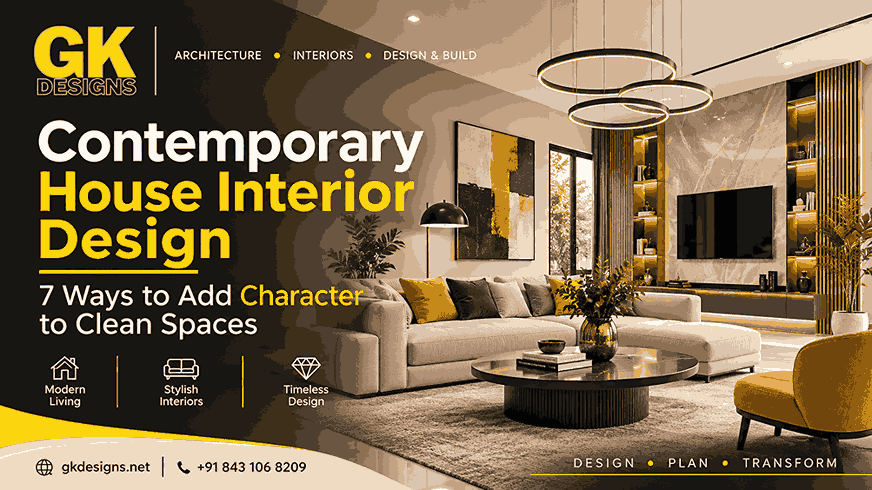
A clean, well-planned home can still feel impersonal when every surface is smooth, every color is neutral, and every piece of furniture matches. Character comes from the details that make a room feel connected to the people who live there: a tactile material, a meaningful object, an interesting light, or a practical feature shaped around a daily routine.
At GK Designs, we approach Contemporary house interior design as a balance between visual clarity and personal expression. The aim is not to fill a room with decoration, but to make a few deliberate choices that add warmth and give each space a reason to be remembered.
1. Mix textures to soften clean finishes
When a room has polished floors, smooth cabinetry, and plain walls, it can feel visually flat. Introducing materials with different textures creates depth while preserving the simplicity of the design. A woven rug can soften a smooth floor; timber can warm up a stone surface; linen curtains can make a room feel less formal.
Try combining a few materials that suit the room rather than introducing many unrelated finishes:
- Soft: wool, linen, cotton, or a textured rug
- Natural: timber, cane, stone, or handmade ceramics
- Reflective: brushed metal, glass, or a polished accent
For example, a clean-lined living room may feel more inviting with a wool rug, timber side table, and ceramic lamp. Contemporary house interior design becomes more comfortable when the materials engage the senses as well as the eye.
2. Add color with one clear focal point
A well-placed accent helps draw the eye through the room and gives the space a personal touch. Repeating the color in small details, such as a cushion, vase, or artwork, creates a subtle sense of balance.
Building a Color Accent
- Use neutral colors as a flexible backdrop for the room.
- Add one carefully chosen accent to give the space personality. This could be a colored chair, painted niche, cushion, or piece of art.
- Repeat the accent color in two or three places so it feels connected to the room.
- Look at existing finishes before choosing a shade. Timber, flooring, and stone can all guide the palette.
- Test the color on a small object first. Daylight and evening lighting can make it look different.
- Keep the largest surfaces calm.
- Leave open space around the accent so it stands out.
This approach adds personality without making the room feel busy.
3. Use artwork to make a room feel individual
Art can bring color and meaning into a clean space without requiring more furniture. A local artist’s work, a family photograph, or an image connected to a memorable place can give a room a point of view. Choose pieces that matter to the household, not only ones that match the cushions.
Scale and placement make a difference. A small print above a wide sofa may feel lost, while a large piece can overwhelm a narrow wall. Consider the furniture nearby and leave enough space around the artwork for it to be noticed.
| Where | Artwork Approach | What It Adds |
|---|---|---|
| Living room | One larger work above the sofa | A clear focal point |
| Hallway | A small sequence of framed pieces | A personal welcome |
| Dining area | Art that echoes the room’s colors or materials | A sense of cohesion |
| Bedroom | A calm image above a low piece of furniture | A quieter atmosphere |
| Entryway | A welcoming print or a small gallery arrangement | A warm first impression |
| Home office | An inspiring image or meaningful photograph | A personal, focused space |
| Staircase | A series of works arranged along the wall | Interest in a transitional area |
| Reading nook | A small piece near a chair or bookshelf | A cozy finishing touch |
Art allows Contemporary house interior design to feel personal while keeping the rest of the room uncluttered.
4. Give meaningful objects room to breathe
A handmade bowl, inherited piece, travel find, or favorite book can say more about a home than a shelf full of generic accessories. The key is to display a few meaningful objects with enough space around them, rather than arranging everything at once.
Choose a visible surface, such as an entry console or open shelf. Place the object where it can be enjoyed, then keep nearby items simple. A small piece can sit on a book or tray so it does not disappear among larger things.
Personal objects can also inspire other choices. A textile might suggest a warmer color; a ceramic piece might introduce a shape or finish that can be repeated elsewhere. This creates a design that feels connected to the people who live in the home.
5. Layer lighting around everyday activities
Lighting affects how a room works at different times of day. A ceiling fixture may provide general illumination, but it may not be comfortable for reading or relaxing in the evening. Combining different light sources makes the room more adaptable.
- Use a ceiling light for general illumination.
- Add a floor or table lamp where people read or unwind.
- Use focused lighting over kitchen work surfaces.
- Consider a pendant to give a dining table a sense of place.
The fixture itself can contribute character. A fabric shade softens a room with sharp lines; a sculptural pendant can add interest above a simple table. Good lighting makes Contemporary house interior design feel welcoming after dark as well as composed in daylight.
6. Mix furniture styles without losing balance
Matching furniture can make a room feel like a showroom. Combining pieces from different styles or periods makes it feel more collected. A contemporary sofa can sit beside a vintage side table; a simple dining table can be paired with chairs in varied finishes.
The pieces still need a relationship. They might share a similar scale, material, or color. Begin with the largest item in the room, then introduce one or two contrasting pieces. This gives the room a focal point without making every object compete.
In a bedroom, Modern bedroom decor ideas might include a simple upholstered bed, a timber bedside table, and a reading lamp with a different shape. Modern bedroom decor ideas work best when they also support rest: keep the palette calm and leave room for everyday essentials.
7. Let practical details contribute to the design
Useful features can become memorable parts of a home. A bench near the entrance gives people somewhere to sit and put down a bag. A kitchen rail keeps frequently used utensils close at hand. Open shelving can display everyday ceramics while keeping them accessible.
In the kitchen, Modern kitchen design ideas may combine streamlined cabinetry with a contrasting backsplash, comfortable handles, or a clear landing space beside the refrigerator. Choose details that suit the way the household cooks and moves through the room. Modern kitchen design ideas should support storage and preparation as well as appearance.
A simple way to plan the change
Notice → Choose → Place → Edit
Start by noticing what the room lacks: warmth, a focal point, better lighting, or a useful surface. Choose one detail that addresses it, place it where it can be seen or used, then edit nearby items if the area feels crowded. This keeps the design intentional and helps Contemporary house interior design stay personal rather than overdecorated.
What the chart means
The arrow shows a practical sequence, not a rule that every room must follow. For example, if a living room feels cold, the first step is to identify whether the cause is the materials, lighting, or color. Then choose one change, perhaps a rug or a lamp and see how it affects the room before adding something else. The edit matters: removing an item can give a carefully chosen detail more impact.
Conclusion
Character comes from the details that make a home feel personal and comfortable. The warmth of wood, the softness of layered lighting, a favorite piece of art, or furniture chosen for everyday living can all give a room its own identity. When these elements work together, the space feels considered without feeling overdone.
At GK Designs, we believe Contemporary house interior design works best when a clear, functional space still feels unmistakably like home. Each choice should support the way the household lives while adding a little warmth and personality to the rooms.