

Finding the top architects in Bangalore can make a significant difference when turning your vision for a home into a well-designed, functional space. A thoughtfully designed home is more than an attractive floor plan; it involves careful decisions about space, natural light, ventilation, movement, materials, privacy, structure, and everyday comfort. The right architect understands these details and brings them together to create a home that reflects your lifestyle while remaining practical and future-ready.
For homeowners searching for Top Architects in Bangalore, the challenge is not simply finding a firm with an impressive portfolio. The more important task is identifying a design partner who understands your site, listens to your requirements, works within realistic boundaries, and can translate your ideas into a buildable architectural solution.
Bangalore’s residential landscape includes compact urban plots, independent villas, contemporary homes, traditional-inspired residences, and large luxury projects.
Define What Your Future Home Needs Before Meeting an Architect
The first step is not contacting several architecture firms. It is understanding what you expect from your home.
Think beyond the number of bedrooms. Consider how your family spends time together, whether you work from home, how much storage you require, whether you entertain guests, and whether the house needs to accommodate future changes.
Prepare a basic requirement list covering:
- Number of bedrooms and bathrooms
- Parking requirements
- Home office or study areas
- Kitchen and utility needs
- Storage requirements
- Outdoor spaces
- Privacy expectations
- Natural light preferences
- Future expansion possibilities
- Approximate construction budget
This gives the architect a meaningful starting point and helps you judge whether their design approach fits your expectations.
Look Past Portfolio Images to Judge Real Architectural Expertise
A portfolio is useful, but attractive photographs should not be the only reason you shortlist an architect.
When evaluating Top Architects in Bangalore, look at the thinking behind their completed projects. Does the work demonstrate thoughtful space planning? Are openings positioned intelligently? Do interiors and exteriors work together? Does the architecture respond to the site?
Try to identify projects similar to yours in terms of size, type, complexity, or location.
See How an Architect Responds to Your Bengaluru Property
Every plot has its own opportunities and limitations.
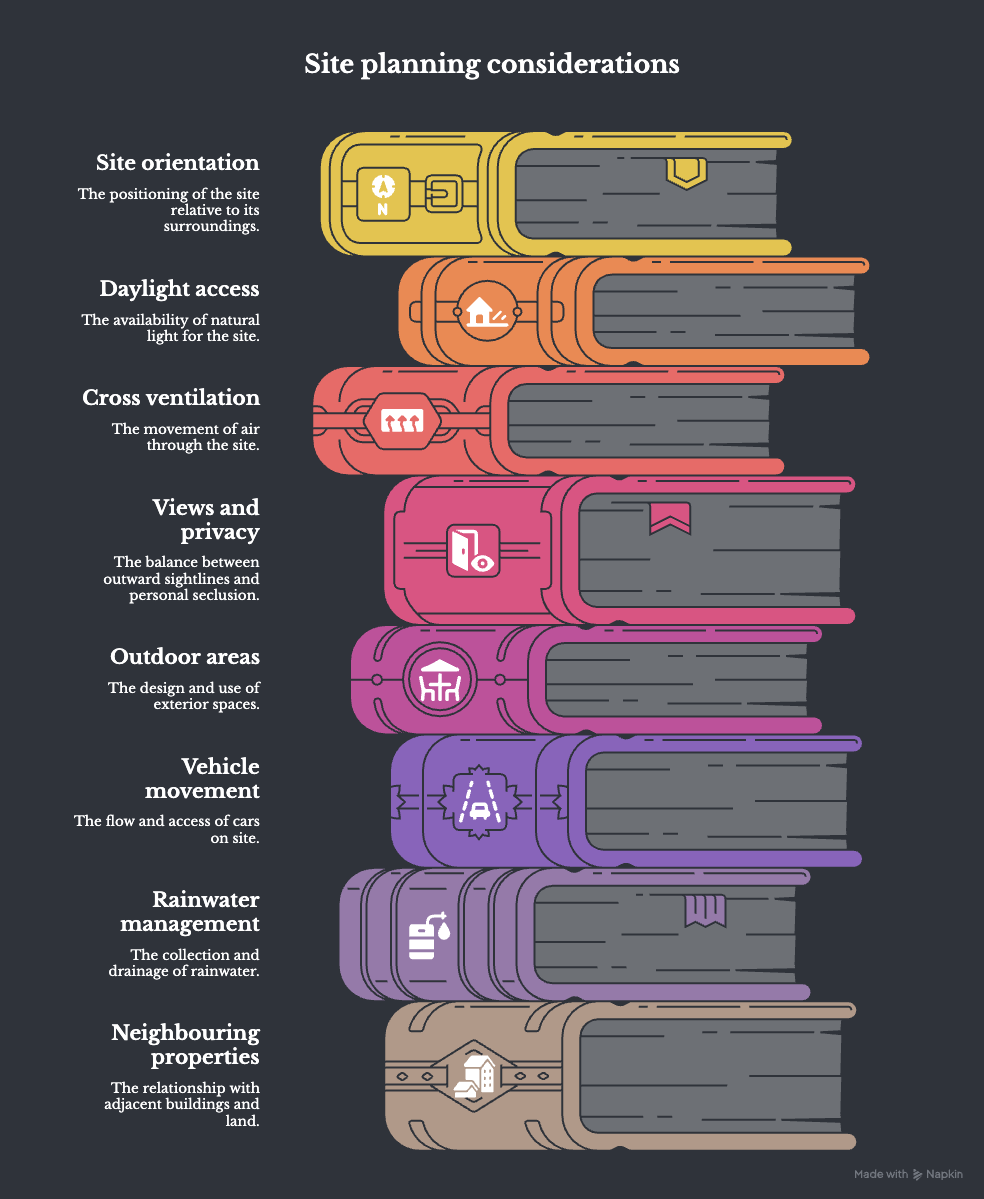
The orientation of your site, road access, neighbouring buildings, existing trees, plot dimensions, setbacks, sunlight, ventilation, and surrounding development can all influence the final design.
An architect should therefore study your property rather than immediately presenting a generic concept.
During an early discussion, ask how the architect would approach:
- Site orientation
- Daylight access
- Cross ventilation
- Views and privacy
- Outdoor areas
- Vehicle movement
- Rainwater management
- Relationship with neighbouring properties
This is particularly important in Bengaluru, where urban plots can vary considerably from one neighbourhood to another.
A strong design partner uses the characteristics of the property as inputs for the design rather than treating the site as an empty rectangle.
Match Your Home Design Ambition With a Realistic Budget
Design quality and budget planning should work together from the beginning.
When speaking with Top Architects in Bangalore, communicate your approximate budget honestly. You do not need a perfect construction estimate at the first meeting, but your architect needs to understand the financial boundaries of the project.
This can influence decisions about built-up area, structural complexity, materials, finishes, windows, landscaping, custom furniture, and other elements.
A thoughtful architect can help identify where spending more creates meaningful benefits.
Compare Design Scope Instead of Choosing by Fees Alone
| Service Stage | What It May Include |
|---|---|
| Initial Consultation | Discuss project goals, requirements, preferences, and expectations |
| Site Analysis | Study site conditions, orientation, access, surroundings, and constraints |
| Requirement Planning | Identify space requirements, lifestyle needs, and functional priorities |
| Concept Design | Develop the initial design direction and architectural concept |
| Preliminary Drawings | Present early plans, layouts, and design options |
| Design Development | Refine the selected concept, spaces, materials, and architectural details |
| Detailed Architectural Drawings | Prepare technical drawings required for design development and construction |
| Material Discussions | Explore suitable materials, finishes, and design specifications |
| Consultant Coordination | Coordinate with structural, electrical, plumbing, or other consultants |
| Construction Support | Provide architectural guidance and support during the construction stage |
Find Out How the Architect Handles Changes During Design
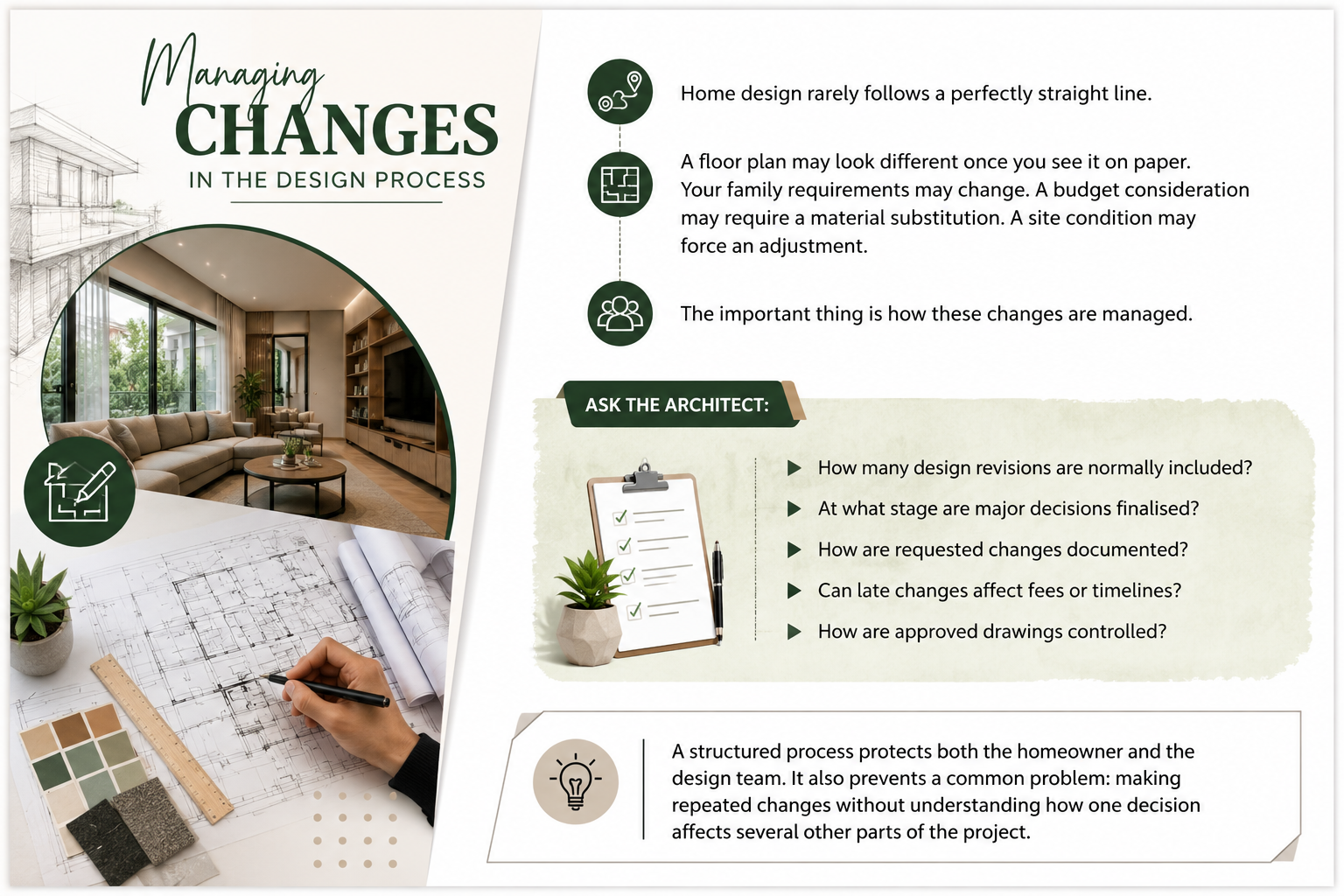
Home design rarely follows a perfectly straight line.
A floor plan may look different once you see it on paper. Your family requirements may change. A budget consideration may require a material substitution. A site condition may force an adjustment.
The important thing is how these changes are managed.
Ask the architect:
- How many design revisions are normally included?
- At what stage are major decisions finalised?
- How are requested changes documented?
- Can late changes affect fees or timelines?
- How are approved drawings controlled?
A structured process protects both the homeowner and the design team.
It also prevents a common problem: making repeated changes without understanding how one decision affects several other parts of the project.
Ask Why Each Design Decision Works for Your Home
One of the strongest indicators of architectural thinking is the ability to explain decisions.
If an architect recommends a large window, ask why it belongs in that particular location.
The answer might involve daylight, ventilation, views, privacy, heat control, or a combination of factors.
Similarly, if a particular room arrangement is proposed, the architect should be able to explain how it improves circulation, privacy, functionality, or family interaction.
For anyone comparing Top Architects in Bangalore, this is an important distinction. A strong architect does not simply present a finished answer; they help the homeowner understand the possibilities and trade-offs.
Speak With Previous Clients Before Finalising Your Choice
A completed project can show you what an architect creates. A previous client can tell you what it was like to work with them.
Useful questions include:
- Was communication consistent?
- Were design changes handled professionally?
- Did the architect understand the original requirements?
- Were timelines communicated clearly?
- Were drawings sufficiently detailed?
- How involved was the architect during construction?
- Were unexpected design-related costs explained?
Do not focus only on whether the client likes the final building.
The working relationship matters just as much because residential projects can take considerable time and involve many decisions.
Key Factors to Consider When Selecting an Architect
- Design Approach: Check whether their design style and philosophy match your expectations.
- Relevant Experience: Look for experience with projects similar to your home or requirements.
- Site Response: Check whether they develop designs based on your property’s specific conditions.
- Budget Awareness: Ensure their design approach can realistically work within your budget.
- Communication: Choose an architect who communicates clearly and responds consistently.
- Service Scope: Confirm that the services and deliverables are clearly defined.
- Documentation: Check whether detailed architectural drawings and necessary documents are provided.
- Construction Support: Understand how involved the architect will be during the construction stage.
- References: Review feedback and experiences from previous clients.
- Compatibility: Make sure you feel comfortable discussing ideas, concerns, and decisions with the architect.
Choose Design Compatibility Over a Famous Architectural Name
A well-known name can create confidence, but popularity alone does not guarantee the right fit.
The best architect for your project depends on what you are building, where you are building it, your budget, your design expectations, and how involved you want to be.
A smaller architectural practice may be ideal for one homeowner, while a larger firm may be more appropriate for another.
Instead of asking only, “Who are the most famous architects?”, ask:
“Which architect understands the kind of home I want to create?”
That question shifts the selection process from reputation to relevance.
The right professional should be able to combine creativity with practical planning and communicate clearly throughout the journey.
Find a Design Partner Who Can Shape Your Home Around You
The right architect does more than prepare drawings for construction. They help transform a collection of requirements into a coherent place to live.
At GK Designs, the architectural process can be approached as a collaboration between the homeowner, the site, and the design team. The goal is to create spaces that are visually considered while remaining practical, responsive, and connected to everyday life.
When comparing Top Architects in Bangalore, look beyond impressive images and rankings. Examine the questions the architect asks, the reasons behind their design decisions, the clarity of their process, and their ability to work within the realities of your project.
The best design partner is not necessarily the one with the loudest reputation. It is the one who can listen to your vision, challenge it when necessary, refine it thoughtfully, and turn it into a home that works for you.