

Choosing an architect is one of the earliest decisions that can shape the success of a home, commercial building, villa, or institutional project. The drawings may look impressive, but successful architecture depends on much more than attractive elevations.
The right professional needs to understand the site, interpret your requirements, manage design decisions, coordinate technical details, and create a building that continues to work long after construction is complete.
This is why the search for the Best architect in India should not be based only on photographs, awards, social media popularity, or the lowest quotation. A better approach is to evaluate how an architect thinks, communicates, solves problems, and translates a client’s requirements into a practical built environment.
What Makes an Architect the Right Choice for Your Project?
Architecture is a combination of creativity, technical knowledge, planning, communication, and execution awareness.
A designer can produce a visually striking concept while overlooking circulation, maintenance, natural ventilation, structural coordination, or the realities of construction. Another architect may create a simpler-looking building that performs significantly better over time.
A capable architect considers questions such as:
- How will people move through the building?
- Where will natural light enter?
- How will heat affect the interiors?
- Can furniture fit comfortably?
- Is storage sufficient?
- How will services be maintained?
- Can the proposed materials withstand local conditions?
- Does the design match the available budget?
- Can the concept actually be constructed?
These questions turn architecture from visual styling into long-term planning.
Why Should You Look Beyond an Architect’s Portfolio?
A portfolio is useful, but it is not the complete story.
Two projects may look completely different because they were designed for different clients, sites, budgets, and lifestyles. Therefore, copying the appearance of another project may not produce the same result for your property.
Instead of asking an architect to reproduce a photograph, study the reasoning behind previous projects.
Look for evidence of:
- Site-responsive planning
- Different architectural styles
- Practical floor planning
- Material selection
- Climate response
- Space optimisation
- Construction detailing
- Client-specific solutions
A strong portfolio should demonstrate adaptability rather than one repeated visual formula.
The objective is to find a design partner who can create an appropriate solution for your project, not simply reproduce a familiar style.
How Does the Site Change the Architectural Design?
One of the most important questions is often overlooked:
What can the site tell the architect before design begins?
The location, orientation, road access, surrounding buildings, sunlight, wind movement, topography, vegetation, drainage, and neighbouring properties can all influence planning decisions.
For example, a narrow urban plot may require a completely different strategy from a large suburban site. A corner property may provide multiple opportunities for access and daylight. A plot surrounded by taller buildings may need a different approach to privacy and ventilation.
This is why an architect should study the site before finalising the design direction.
A strong design does not force the site to fit an idea.
It allows the site to influence the idea.
What Questions Should You Ask Before Hiring an Architect?
Instead of beginning with “How much do you charge?”, start with questions that reveal how the architect approaches a project.
Ask:
How do you begin a new project?
The answer can reveal whether the process begins with a genuine understanding of the client and site or jumps immediately into visual concepts.
How do you develop the design?
A professional should be able to explain how requirements become layouts, concepts, drawings, revisions, and construction documentation.
Who will actually work on my project?
Knowing whether you will communicate directly with the architect, a project architect, or another team member can prevent confusion later.
How are revisions handled?
Design naturally evolves. Understanding the revision process before starting helps establish realistic expectations.
How do you coordinate with structural and service consultants?
Architecture does not exist separately from structure, electrical systems, plumbing, HVAC, lighting, and other technical requirements.
The quality of these answers can tell you more than a promotional presentation.
How Important Is Communication During Architectural Design?
Even an excellent design can become difficult when communication is unclear.
Clients make dozens of decisions during a project. Materials change, requirements evolve, budgets are reassessed, and construction conditions can create new questions.
A good architect creates a process for handling these changes.
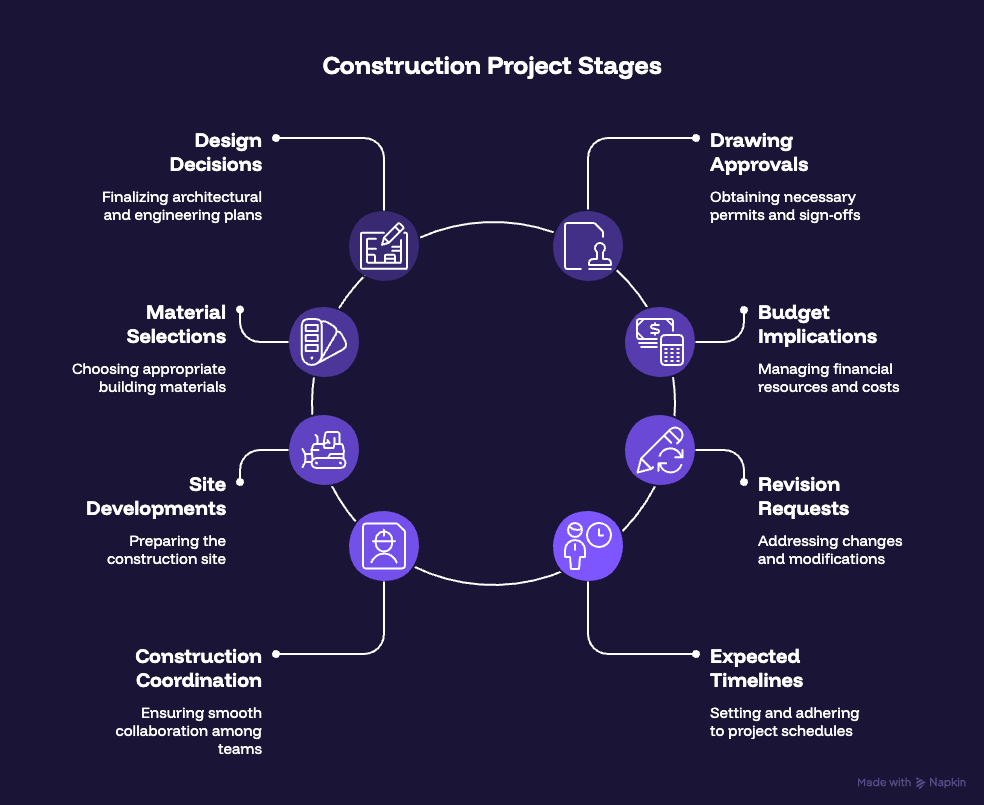
Communication should ideally cover:
- Design decisions
- Drawing approvals
- Material selections
- Budget implications
- Site developments
- Revision requests
- Construction coordination
- Expected timelines
This reduces the possibility of assumptions becoming expensive mistakes.
The Best architect in India for one client may not necessarily be the right choice for another. Compatibility in communication, expectations, design philosophy, and project scale matters.
How Can Architecture Balance Beauty and Practicality?
Good architecture does not force you to choose between appearance and usability.
A successful building should feel intentional while also supporting everyday activities.
Consider a home.
A beautiful living room may look excellent in photographs, but if the circulation path cuts directly through the seating area, the room may become uncomfortable. A dramatic staircase may create a strong visual feature, but it must still be safe and convenient. Large windows can create beautiful interiors, but their orientation and shading need consideration.
The strongest designs solve several problems simultaneously.
A window can provide:
- Daylight
- Ventilation
- A visual connection to the outdoors
- A design feature
- Potential energy benefits
That is where architectural thinking becomes valuable.
How Should You Evaluate the Budget Without Choosing Only on Price?
Budget is an essential part of architectural planning.
However, comparing architects only by professional fees can be misleading.
A design that appears inexpensive at the beginning may create higher construction costs through inefficient planning, unnecessary complexity, difficult structural solutions, excessive material wastage, or repeated changes.
A more useful question is:
What value can the architect create within my available budget?
This means discussing the financial framework early.
The architect should understand:
- Approximate project budget
- Site conditions
- Desired quality level
- Functional requirements
- Priorities
- Areas where savings are possible
- Features worth investing in
Cost-conscious design does not mean making everything cheap.
It means spending deliberately.
When Does Material Selection Become an Architectural Decision?
Materials influence much more than appearance.
Stone, brick, concrete, wood, glass, metal, laminates, tiles, and other materials behave differently in terms of durability, maintenance, weather resistance, installation, availability, and cost.
A material that looks excellent in a reference photograph may not be suitable for every site.
An architect should consider:
APPEARANCE + DURABILITY + MAINTENANCE + AVAILABILITY + BUDGET
This approach creates a more realistic material strategy.
For example, exterior finishes exposed to intense sunlight and rain may require a different specification from materials used in protected interior spaces.
The right material is not necessarily the most expensive one.
It is the one that performs appropriately for its application.
Why Does Climate Matter in Indian Architecture?
India contains dramatically different climatic conditions.
Architecture in Bengaluru cannot simply follow the same response used in a hot and dry region, a coastal environment, or a cold Himalayan location.
Climate can influence:
- Building orientation
- Window placement
- Shading
- Roof design
- Material choices
- Ventilation
- Landscape planning
- Thermal comfort
A climate-responsive building can reduce dependence on artificial systems while creating a more comfortable environment.
This is also where local architectural knowledge becomes valuable.
An architect working across different regions should understand that the same design solution does not automatically perform equally well everywhere.
How to Compare Architecture Firms Before Choosing the Right One
| WHAT CLIENTS COMPARE | BEST ARCHITECTURE FIRMS IN BANGALORE | ARCHITECTURE FIRMS IN INDIA | TOP ARCHITECTURE FIRMS IN BANGALORE |
|---|---|---|---|
| Project Location | Check experience with Bangalore’s urban conditions and local sites. | Consider experience across different Indian regions and locations. | Look beyond reputation and check whether the firm suits your location. |
| Project Experience | Review experience with residential, villa, commercial, or similar Bangalore projects. | Check whether the firm has handled your specific building type and project scale. | Focus on relevant completed projects rather than the number of projects. |
| Design Approach | See whether the firm’s design style matches your expectations and lifestyle. | Evaluate whether the design approach adapts to different climates and contexts. | Compare design thinking, not just visually impressive portfolio images. |
| Technical Capability | Check drawings, structural coordination, services, and construction documentation. | Consider the firm’s ability to manage technical requirements across different project types. | Look for evidence that design concepts can be translated into practical construction. |
| Communication | Understand how the team communicates during design and site execution. | Check how the firm manages clients, consultants, and local project teams. | Do not assume popularity means better communication or service. |
| Site Involvement | Ask how frequently the team reviews the project during construction. | Understand how the firm handles projects outside its primary operating location. | Check whether the firm’s involvement continues beyond design approval. |
| Climate Response | Evaluate how the design responds to Bangalore’s sunlight, rainfall, ventilation, and surroundings. | Check whether the architect understands the climatic requirements of your region. | Make sure the firm’s recognised projects demonstrate context-responsive design. |
| Popularity vs Suitability | A highly regarded firm may still not match your project’s requirements. | A nationally recognised practice may not be ideal for every project type or location. | Being well-known does not automatically make a firm the right choice for your project. |
| Final Question | Does the firm’s Bangalore experience match my project? | Does the firm’s wider experience match my location and requirements? | Is the firm’s reputation relevant to what I actually need? |
Can an Architect Help Prevent Construction Problems?
One of the strongest signs of architectural experience is the number of problems that never become visible to the homeowner.
An architect may identify:
- Poor circulation before construction
- Conflicting door positions
- Insufficient storage
- Difficult service access
- Inappropriate materials
- Lighting conflicts
- Structural coordination issues
- Drainage concerns
- Construction detailing problems
Once these issues are corrected during design, the final building may appear simple.
That simplicity is often the result of careful planning.
Good architecture is not only about adding impressive features.
It is also about removing avoidable problems.
What Should You Expect During the Design Process?
A professional architectural process normally develops through stages rather than jumping directly from an initial meeting to construction.
Depending on the project, the process may include:
Requirement Study → Site Analysis → Concept Development → Space Planning → Design Development → 3D Visualisation → Technical Drawings → Consultant Coordination → Construction Support
Each stage has a different purpose.
The early stages establish what the project should become.
The later stages establish how it can actually be built.
Understanding this distinction helps clients recognise why detailed architectural work takes time.
What Are the Warning Signs of the Wrong Architect?
Sometimes the easiest way to identify a suitable architect is to recognise warning signs early.
Be cautious when:
- The portfolio is the only major selling point
- The architect avoids discussing budget
- Site analysis is treated as unnecessary
- The design process is unclear
- Technical drawings are not discussed
- Responsibilities are vague
- Communication expectations are not established
- Every project appears almost identical
- Promises are made without explaining limitations
- Construction realities are ignored
These signs do not automatically mean a firm is unsuitable, but they are reasons to ask deeper questions.
Frequently Asked Questions
⬇
1. How do I choose the best architect in India for my project?
Start by comparing an architect’s experience, design approach, site analysis process, technical documentation, communication style, budget awareness, and experience with projects similar to yours. The right architect should understand your requirements rather than simply reproduce a preferred design style.
2. What should I check before hiring an architect for a home or commercial project?
Review their relevant portfolio, previous project experience, scope of services, professional fees, design stages, revision policy, consultant coordination, site visits, construction support, and expected timelines. A clear agreement helps avoid misunderstandings during the project.
3. How can GK Designs help with architectural design in India?
GK Designs approaches architectural projects by connecting the client’s requirements with site conditions, functionality, aesthetics, materials, and practical execution. The focus is on developing design solutions that are visually distinctive while remaining suitable for everyday use and long-term performance.
What Should the Right Architect Ultimately Deliver?
The final value of architecture is not measured only by the elevation.
It is measured by how successfully the building performs.
The right architect should help transform an idea into a coordinated project where aesthetics, functionality, budget, site conditions, materials, structure, services, and construction requirements work together.
That is the real reason choosing the Best architect in India requires more thought than simply searching for the most popular name.
For clients considering GK Designs, the starting point should be a conversation about the project itself: what you want to build, where you want to build it, how you want the space to function, and what constraints need to be respected.
Once those questions are clear, the search becomes much easier.
Because the best architectural choice is rarely about finding the architect with the biggest portfolio.
It is about finding the architect whose thinking is right for your project.